Gulf capital in Africa is usually discussed through loud headlines. Think of multi-billion-dollar sovereign pledges and massive real estate master plans, such as Abu Dhabi’s $35 billion Ras El Hekma agreement in Egypt.
However, real estate tells only part of the story.
When you track where capital actually clears on the ground, UAE and Saudi investors are steadily buying into hard infrastructure. Consequently, money is flowing directly into the systems that power trade, energy, and industrial growth.
Where Gulf Capital in Africa Is Landing
Looking at active transactions across the continent, three core sectors stand out for capital intensity and operational intent:
-
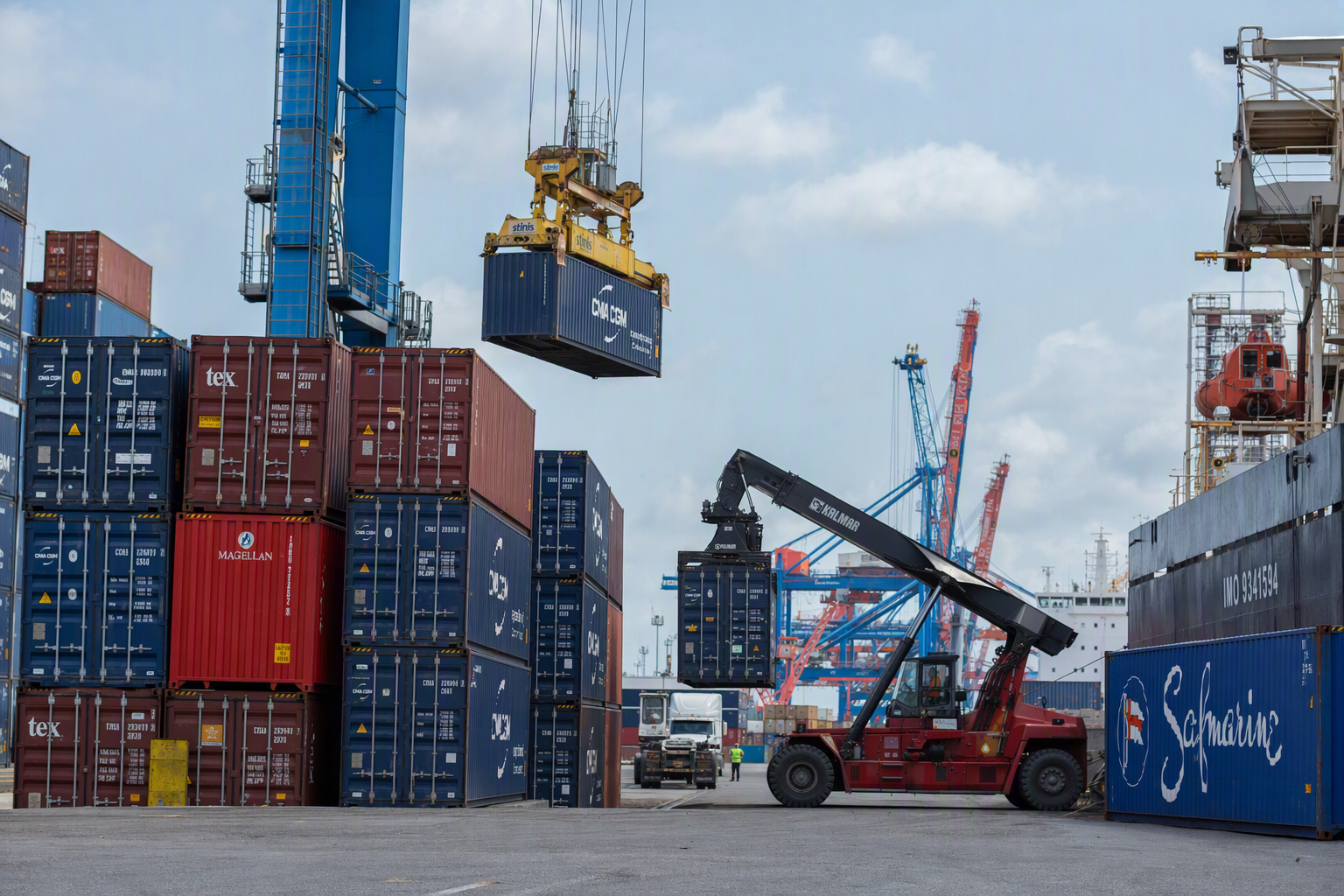
Ports and Trade Corridors: Gulf interest goes far beyond terminal ownership. For example, Dubai-based DP World operates ports in Dakar, Maputo, and Berbera, while also developing the Banana Port deepwater gateway in the DRC.
-
Energy Transition: Saudi Arabia’s ACWA Power and UAE-based AMEA Power are deploying utility-scale assets. Key examples include AMEA Power’s operational 500MW Abydos solar plant in Egypt and ACWA Power’s 100MW Redstone concentrated solar project in South Africa.
-
Critical Minerals: UAE-based International Resources Holding (IRH) secured a 51% controlling stake in Zambia’s Mopani Copper Mines for $1.1 billion. Therefore, Gulf entities are actively locking down critical copper supply chains.
Key Markets Shaping Gulf Capital in Africa
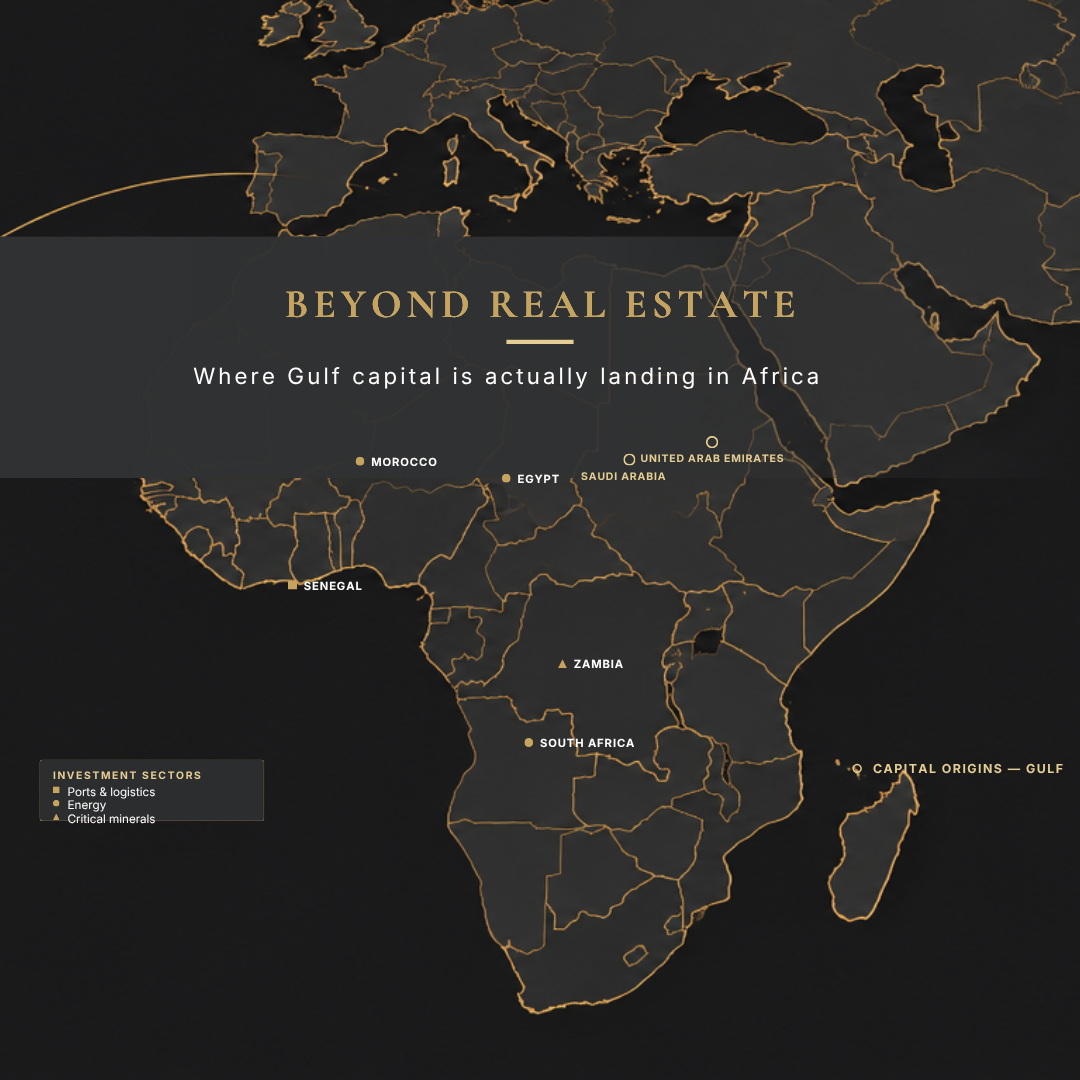
Reviewing selected deals by geography highlights how different commercial strategies are playing out:
-
Egypt: Acts as a multi-sector anchor spanning real estate, ports, renewables, and industrial zones.
-
Morocco: Serves as a primary hub for utility-scale solar, wind, and green hydrogen exports.
-
Senegal: Anchors West African maritime logistics through DP World’s active port operations.
-
Zambia: Demonstrates direct entry into strategic copper and mineral production.
-
South Africa: Focuses heavily on utility-scale renewables to solve industrial power deficits.
Practical Takeaways for Cross-Border Strategy
-
Let infrastructure guide market selection: Port efficiency, grid reliability, and logistics costs directly dictate unit economics. Therefore, evaluate hard infrastructure before committing expansion capital.
-
Look for ecosystem plays: Every new port, solar plant, or mine triggers downstream demand. As a result, local engineering, freight, maintenance, and compliance firms can easily plug in.
-
Bring bankable economics: Gulf institutional investors expect clear revenue drivers and sound governance. Consequently, ambitious market projections alone will not secure funding.
-
Treat Gulf groups as commercial operators: Beyond balance-sheet cash, active Gulf entities bring global procurement networks, technical expertise, and vital off-take access.
Ultimately, Gulf capital in Africa is no longer just about property acquisitions. For companies planning cross-border growth, mapping where these hard assets land reveals exactly where the next commercial corridors and partnerships are opening.
Navigating Your Next Cross-Border Expansion?
At Agapely Advisory, we help founders, investors, and corporate leaders cut through macro noise to design pragmatic market entry and capital strategies across Africa, the Middle East, and Europe.
If you are evaluating cross-border opportunities, aligning with emerging trade corridors, or positioning your business for institutional co-investment, let’s connect directly to discuss your roadmap for the next cycle Book A Consultation | Let’s discuss your business growth.